



“The festival provided wonderful insights for our Megalith inspired art work, and a magic surprise about where Mike lives in Broom.”
The summer has been caught up in creating a spiritual garden space celebrating all that is Earth’s, and indeed our relationship, with the Sun and Moon and dealing with health problems and much needed maintenance work, such is life. Nonetheless a lovely summer, but some creative projects have been side-lined for a while to get working spaces freed up again for making. Sometimes a break is what’s needed to get on with other things. It is the nature of the ebb and flow of creative energy cycles.
The spiritual philosophy which underpins our art partnership, and more generally, is to tune into the energetic flow which is there for you, not work against it. Thats where the magic happens, and magic did indeed happen unexpectedly this weekend.
Mike already had, a few weeks ago, been creatively kick started, when finding further academic research on Stonehenge modelling for sound. It seemed a no brainer to see if Earthwaves Megalith collaborative sound work could go in this direction doing some ceramic Stonehenge shaped sound work. Mike realised that it needed a revisit to Stonehenge to just soak up a bit more detail on the stones before starting this project. So he was minded to park it until the spring. Then, just as we gear up our creative energies to focus on other aspects of our Megalithic journey for this years Solstice in the spiritual garden space, we unexpectedly found the Festival of Neolithic Ideas at Stonehenge and rearranged our plans to go. Oh my! What an amazing event.

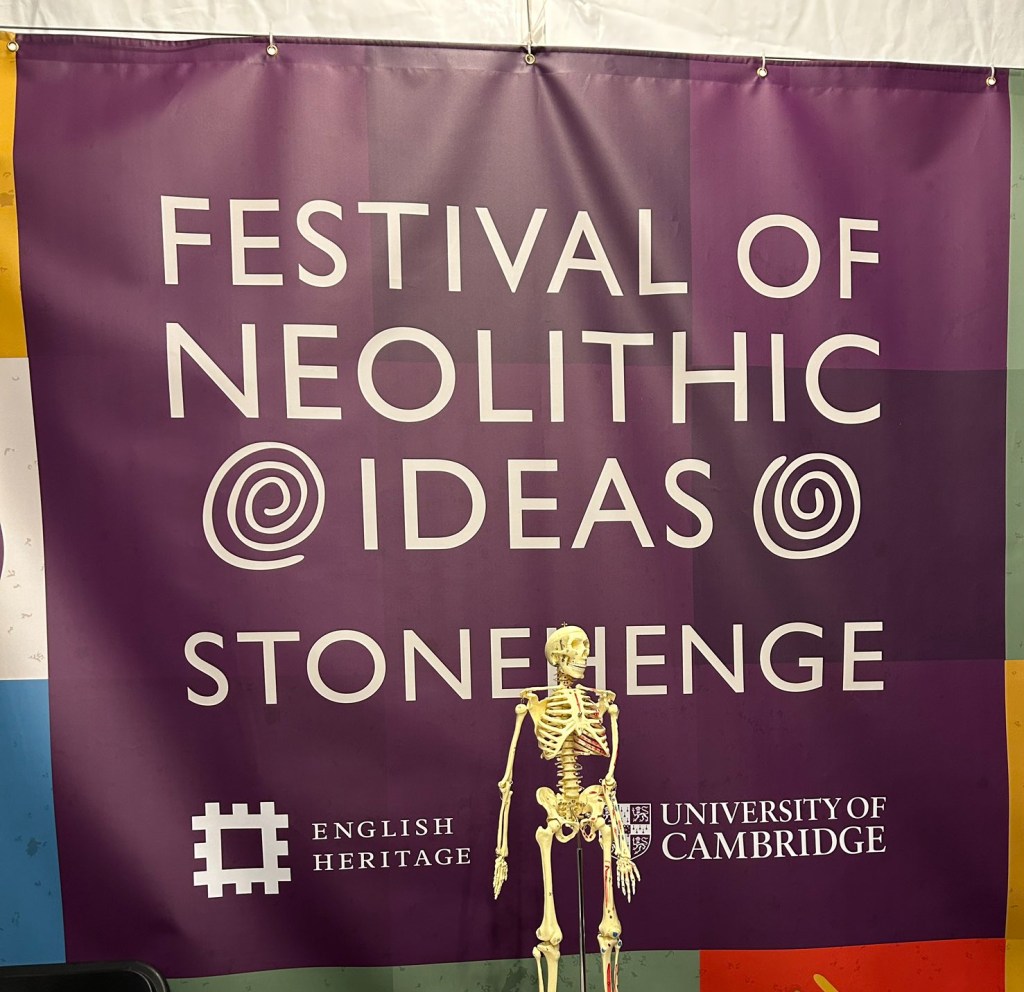
The festival brought together a wide range of British universities and archaeological researchers, with the Stonehenge heritage site guardians, English Heritage and the National Trust to share current thinking on Neolithic life. There is nothing quite like great science and scientists who both methodically apply their formidable intellects to interpreting evidence, using new technology and research techniques to piece together the all too often hidden, and physically buried, prehistoric Britain. These days archaeology is a complex nuanced web of multidisciplinary talents that interact to really get a vastly updated view of the sophisticated and highly skilled people of prehistoric Britain. These researchers were great people, very friendly and passionate about their field of enquiry, geared up to communicating complex work well to a wide audience. There were numerous stalls with loads of fun, short, learning activities, which provided a wonderful antidote to the endless populist anti-expert media and the all too overly and ignorantly self opinionated voices on social media. We got to talk to people from Cambridge University, Cardiff University, Bournemouth and more.
We were able to find out more about Neolithic people moving in the landscape, food and diet, the shift from living in the wild to farming and how it happened, fibres and weaving, including from nettles, geology and links with biochemistry for archaeology, how people experienced, perceived and used the night skyscape, and toured the huge landscape to discover more about the enormous Cursus and many barrows. We got to take the further image references too of Stonehenge stones for our sound work project. It could not have been a better day although it was impossible to fit it all in, there was even more to see.
The festival has given us more information for our story writing, Megalith: Lan and Deek and the bluestones. The story is the base from with our art work comes currently.
There was an extra bit of magic which enabled Mike to reconnect to an earlier community based abstract painting project, mapping community stories. Whilst talking to a researcher from Cambridge we found that Mike has been living in the “small village” which the Cambridge Archaeological Unit has been excavating extensively all the years he’s been living there. So Mike is already living in a rich Neolithic landscape! The research is documented so we will be getting hold of that as part of our investigation into Neolithic landscapes. Although there is evidence of prehistoric Megaliths in Broom to our knowledge yet, but perhaps some scope to create work about the Bedfordshire Neolithic period. We are sure that Mike’s Neolithic neighbours would have loved the spiritual garden work and probably wanted to join in our planned Solstice activities. Somehow all the moon and sun watching and stargazing will feel all the richer knowing we are seeing things that Neolithic people in the very same place all that time ago would have thrived on and been expert observers of.

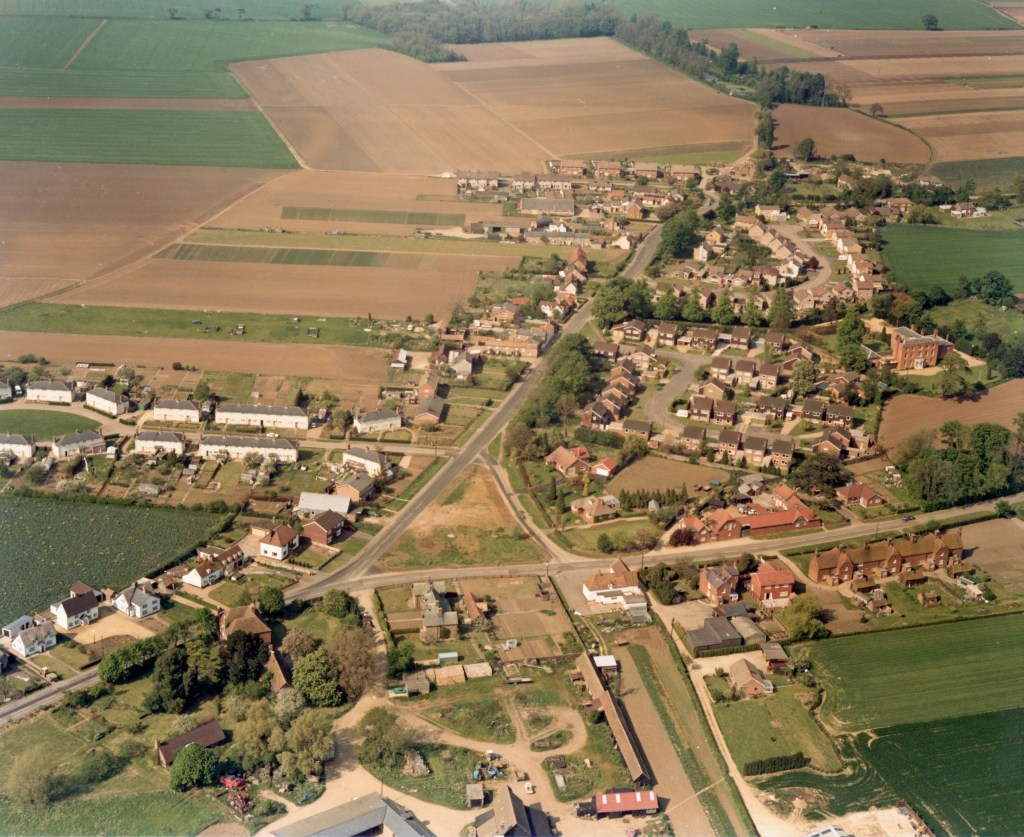
The above aerial photograph of Broom is many years old now but the village has only changed slowly over the years, earliest recorded in the Doomsday Book. The gravel extraction quarry has been worked around the village over a 25 year period after this photograph was taken and where the extensive archaeological excavations have been carried out. Where quarry sites are now exhausted is now wet land and lakes amongst the recreated fields. The quarrying is still being done and will continue for some years yet. Ironically this is earth moving at a scale that is familiar at the Stonehenge Heritage site, just with machines. We might wonder what Neolithic people would have made of modern farming and quarrying all now largely done at scale with a very small labour force. This photograph was used for one of Mike’s earlier projects where he “mapped” stories of people living in Broom and moving around the village, see below. We can now imagine the stories of the old Neolithic neighbours.


