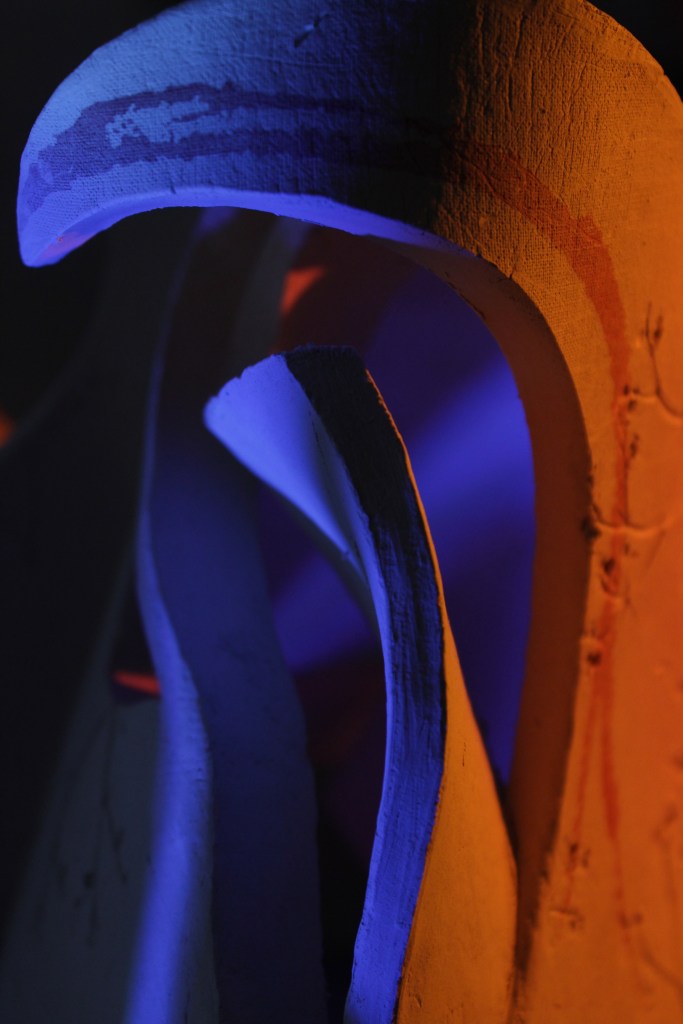
The new year has taken us in a new direction, shifting out of our normal approach to using familiar media by flipping our previously habitual creative processes.
Mike has flipped the order of how potters normally work in clay. People familiar with “The Great Pottery Throw Down” know that you make the clay form, often from a design, and then decorating it, usually after a bisque fire that leaves it porous for the surface glazes to stick on. While notable variations exist, colouring is traditionally a secondary process. Any considerations for form related decoration are consciously planned at the design stage when making the form.

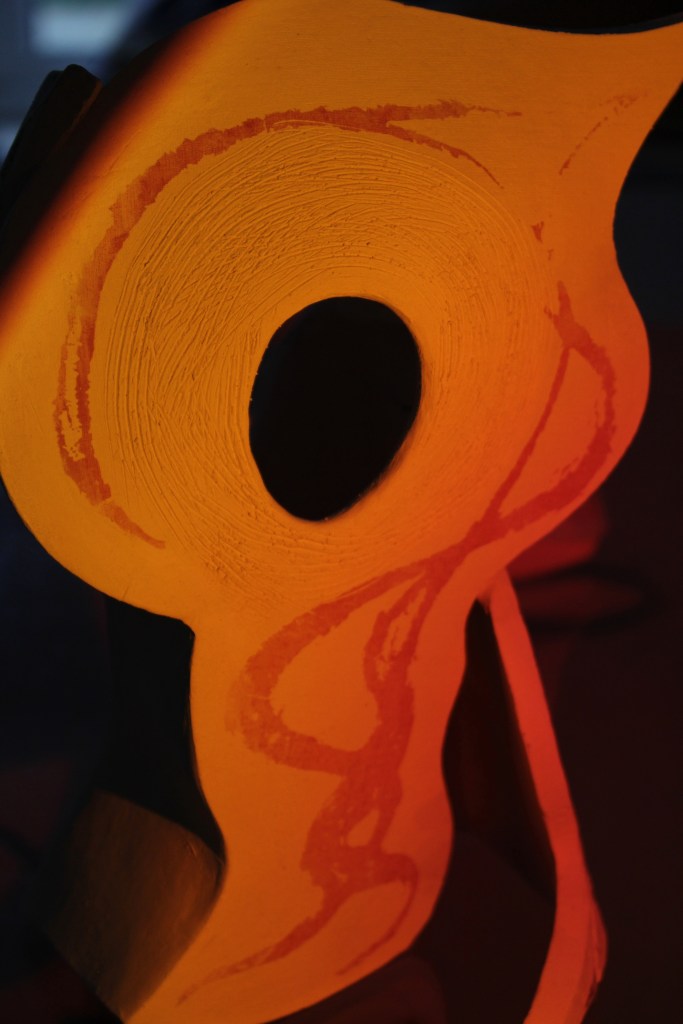
Previous blogs have been about Mike exploring clay screen printing, coloured ceramic medium which is to be printed on and formed out of a slab. The form is the priority, considered before the print design is fixed; the print had to fit the dimensions of the intended piece. But Mike has taken the sweeping curvature of Lance’s expressive motif, reminiscent of what we imagine of Neolithic dancers, and wanted to work just with the curvature of the lines in an abstract way.

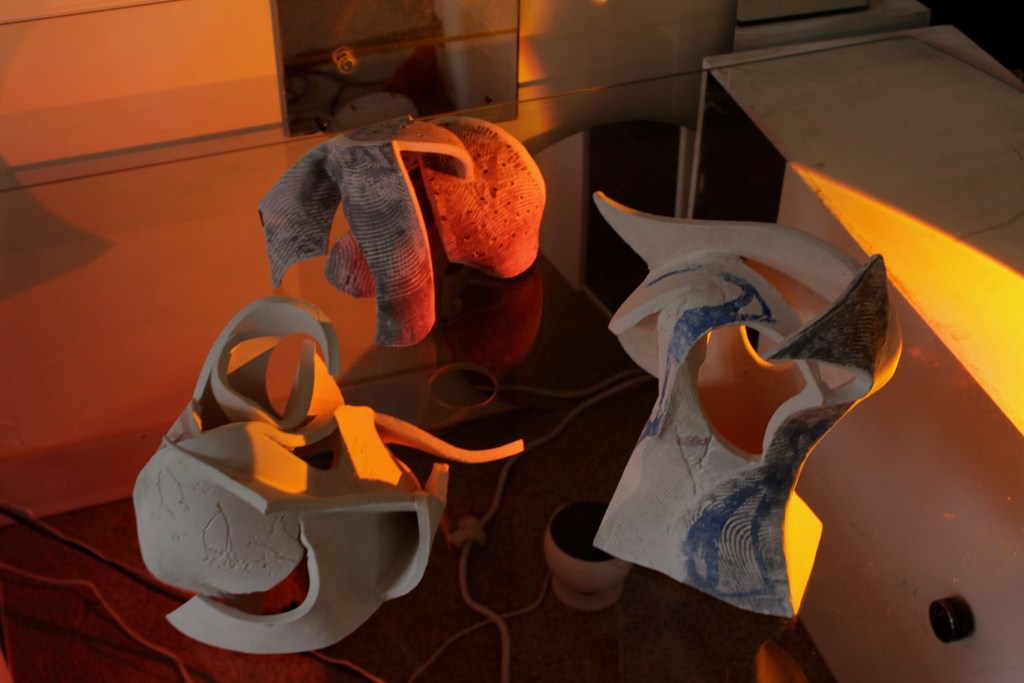
To achieve this, he turned the making process upside down to print a slab and then cut the form expressively, following the pre-printed decorative line with no form in mind. The abstract sculpture created when the edges of the cut shapes are joined together emerges from the lines of the shaped pieces. The notion stemmed from sewing clothes, where the cut fabrics create the correct body shape by joining edges together. Of course garment patterns are skilfully planned to get the correct shape; Mike’s process was free form.
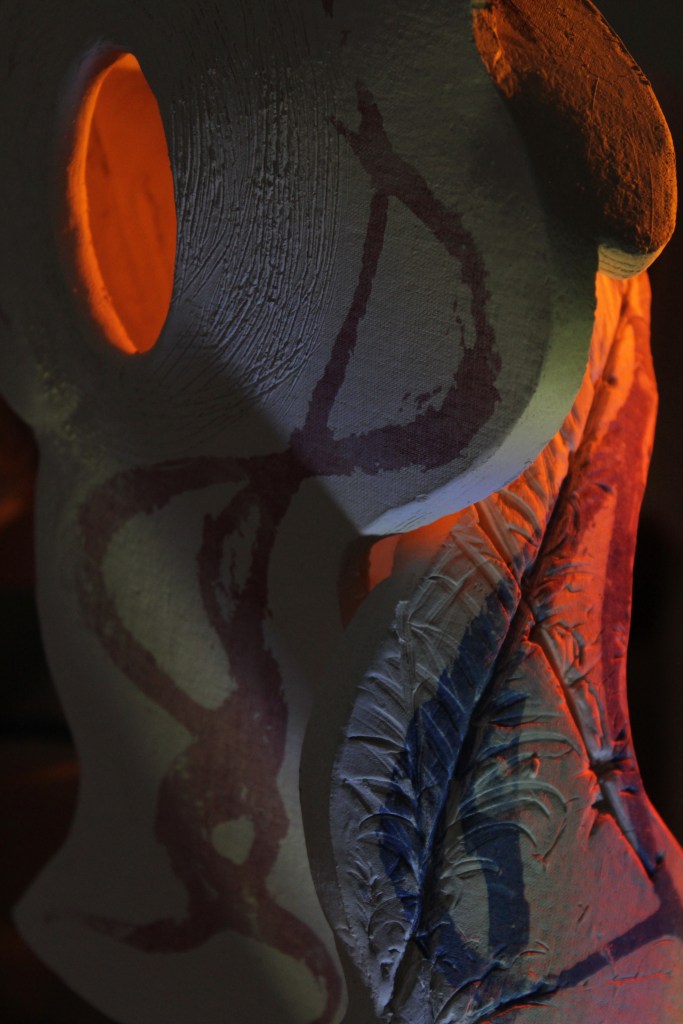
Mike discovered: “When you allow the joining of lines to create form, piece after piece of flexible slab clay, it opens up your creativity. It becomes a divergent brain process not a narrowing convergent process. So the created piece opens, with relative ease, to fascinating shapes that would have been difficult to conceptually design.” He found that “By using this process the movement in the screen printed abstract “dancer” forms translates into movement in the 3D form of the clay sculpture.”
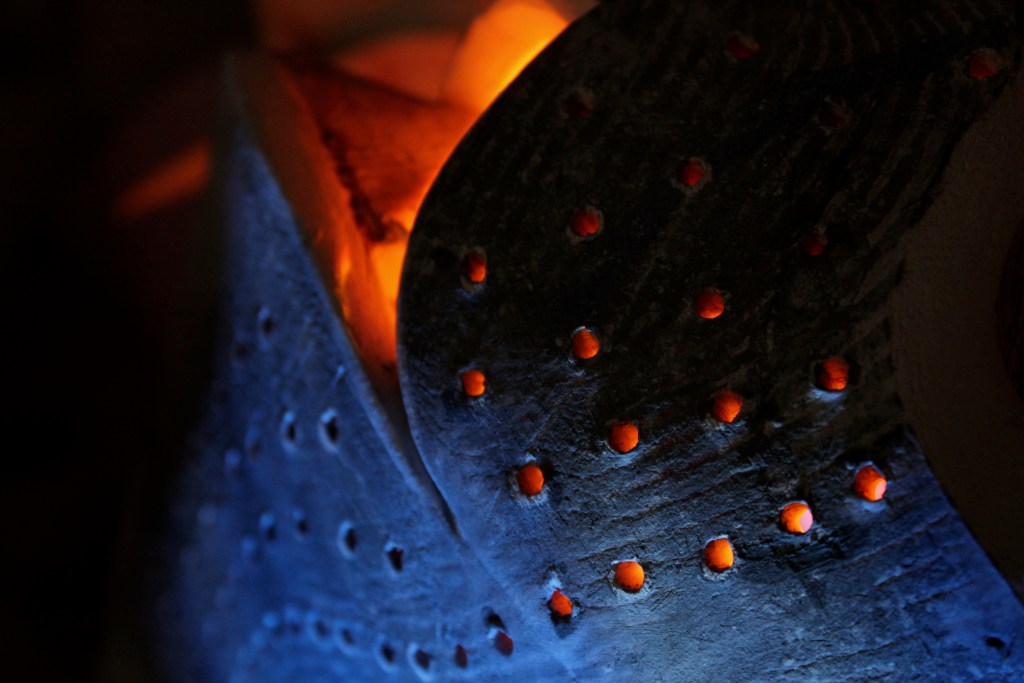
It is not a random process, anymore than the original drawing of the motif, but the focus is on the choosing of which cut out pieces to work with, then joining and creating the work piece on piece. It results in wonderful lines getting translated into 3D form. How each piece follows the line of the joined pieces creates bends and shapes in the clay that seem original and unlikely if it were designed and then made. It isn’t an easy make, but Mike’s skill built up over a number of years enables him to intuitively work with this clay in a way that pushes boundaries and, at moments, works at the edges of possibility of the making process.

The faces in the sculptures also work beautifully with our projections of light and video, and we find ourselves returning to our collaborative work, at the beginning of the Earthwaves partnership. It feels very exciting and has really enlivened our work. Mike did the making and Lance did the light and photography. This is clearly the start of something we shall explore further this year the possibilities just flowing easily.
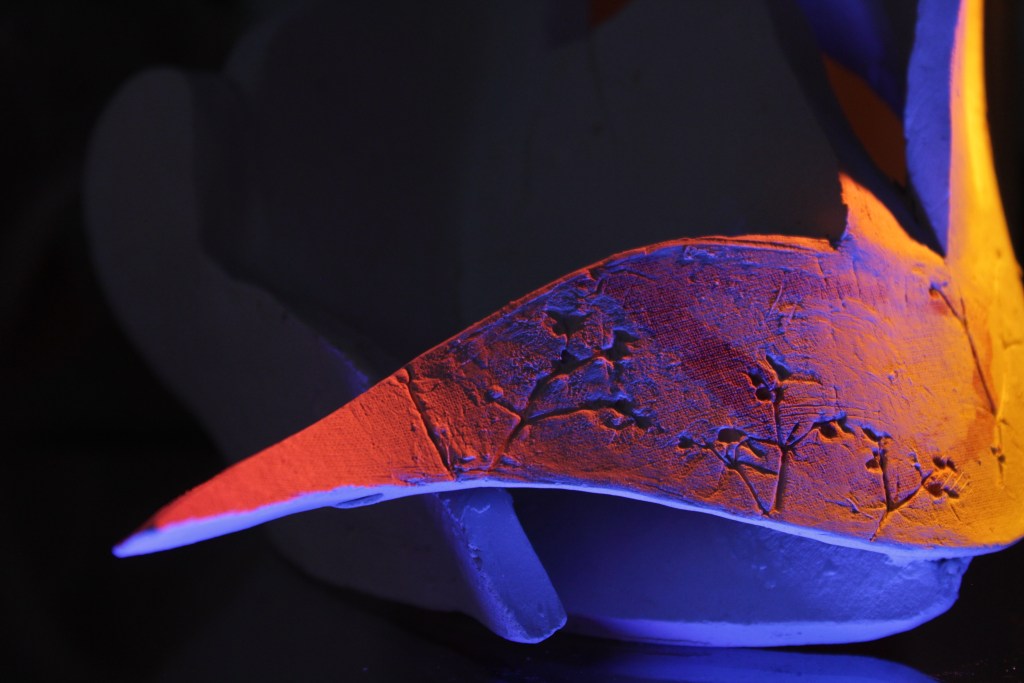
So far the first three sculptures are all different but have some sense of movement, whilst being grounded on the base surface. Not unlike dancers grounded on the earth and moving from that position of strength. The sculptures seem also to have that chunky quality of stone, and what we may call our neolithic aesthetic, movement of humans, and building of the monumental.