
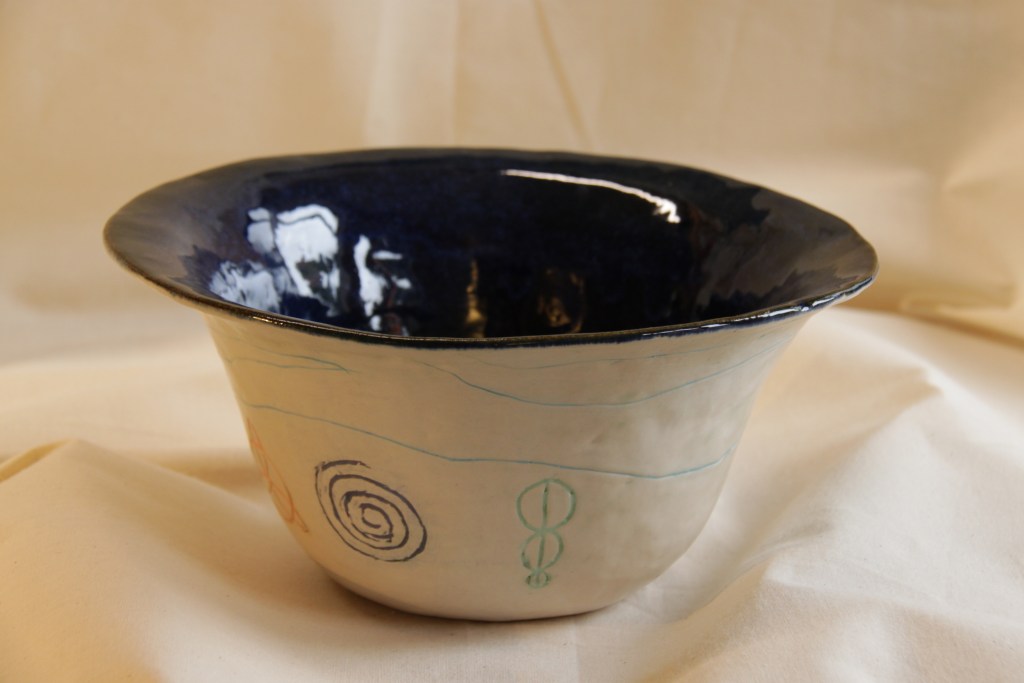

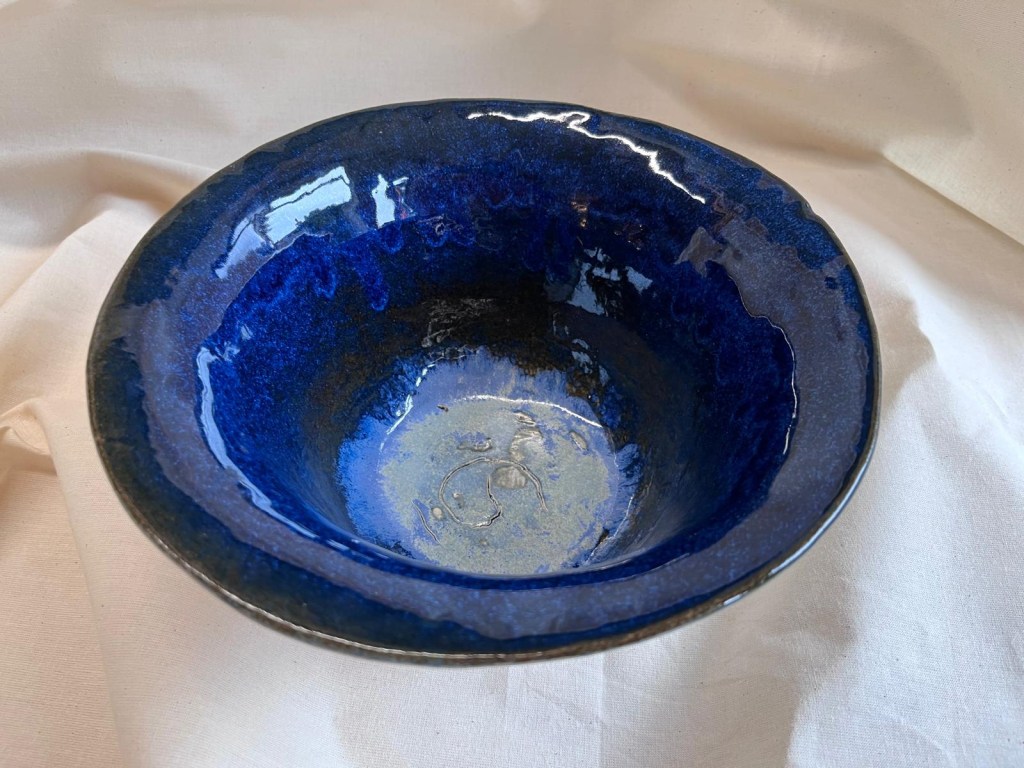
We believe that sound, especially at Stonehenge, would have had a particular sensitivity for Neolithic folk being in the subtle sounds of the natural landscape. There is some scientific work that suggests that Stonehenge was built to create a certain resonance of sound. The Resonance Bowl will ring beautifully when struck and was made with a bell shape to see if it would.
We find sound, like sound therapy, which Lance has trained in, has a real effect on at least our consciousness, whether or not it has the healing and spiritual qualities sometimes ascribed to it. The bowl may not be as simple as firing technology allowed in the UK at that time, it is a hand coiled pot, and incised as pots were in Neolithic times. Try ringing low temperature fired pots and you definitely get a resonance, so it is highly unlikely Neolithic people wouldn’t have used them to make sound in their big gatherings along with voices. Its also fun just to grab a stick (or antler) and make percussive noise in a group. Drum circles are a case in point today, bringing feelings of community and connectedness as the rhythm begins to take structure.
In our story Lan has the fascination with sound and Deek with the making of bowls, as it clay form of stone, that turns back into hard stone. So the resonance bowl is a deeply heartfelt present from Deek to Lan. We also use the bowl in our first story of these characters which rings the bowl in a stone circle.
On visiting the Must Farm archaeology exhibition you do see some beautiful and thinner ceramic pots. They may have been imported as fine ceramics are associated with imported items. None-the-less ordinary British Neolithic people had access to these even in the East Anglian Fens. The thickness of pots also affects the sound of a pot when struck. Unfortunately the resonance goes when the pot is cracked, a sure way to test for cracks, when buying an old pot. So even if we had the chance those real ceramic artefacts would not be able to tell us much about sound.
The Resonance Bowl Mike made is thicker than those Neolithic pots, largely because he was working from our previous experience of Neolithic Beaker ware, and Grooved ware which are much cruder thicker working pots. So another project is to make a thinner pot, perhaps earthenware to see the sound it makes, but Mike will have to improve his Earthenware skills. So our other work on resonance with finer cast ceramics may be more appropriate than we though to Neolithic people’s potential interest in making sound from ceramics. At least we cannot rule that out.