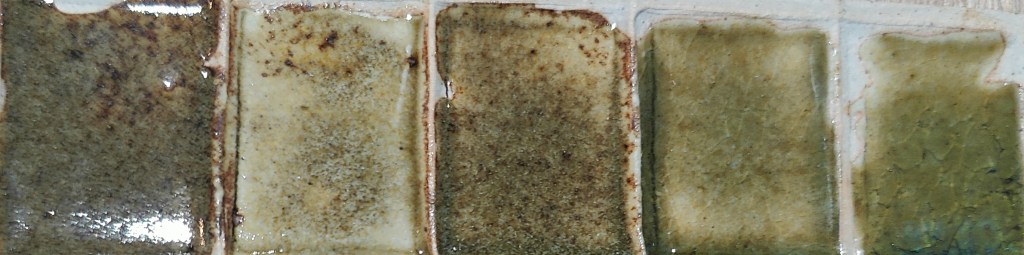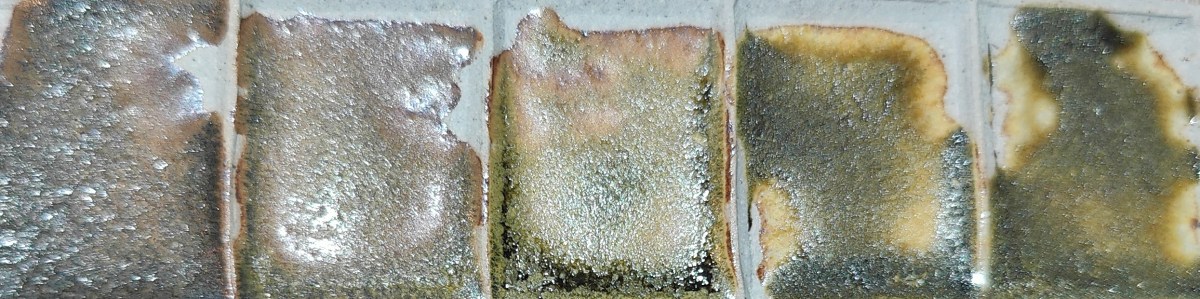

Over the last year Mike has been on two glaze courses so he was not reliant on commercial glazes. The impetus for this has been frustration at producing certain pieces, to explore more stony rock ceramics which still held the potential for colour flexibility, and also to explore how to use materials found in the landscape. The first stop was Matthew Blakely‘s excellent Rock Glazes Unearthed book. But as with most comprehensive manuals you have to be quite an experienced and probably have an academically trained pottery background to have the confidence to work through the detail and bring it into your practice. Taught courses are always great when you can get them especially from experts and leaders in field. So the first glaze course was an all round glaze course last year, at Matthew Blakely’s Cambridgeshire studio and Mike was able to come away able to try making a wide range of glazes and confidence to experiment to get some fantastic stoneware results.
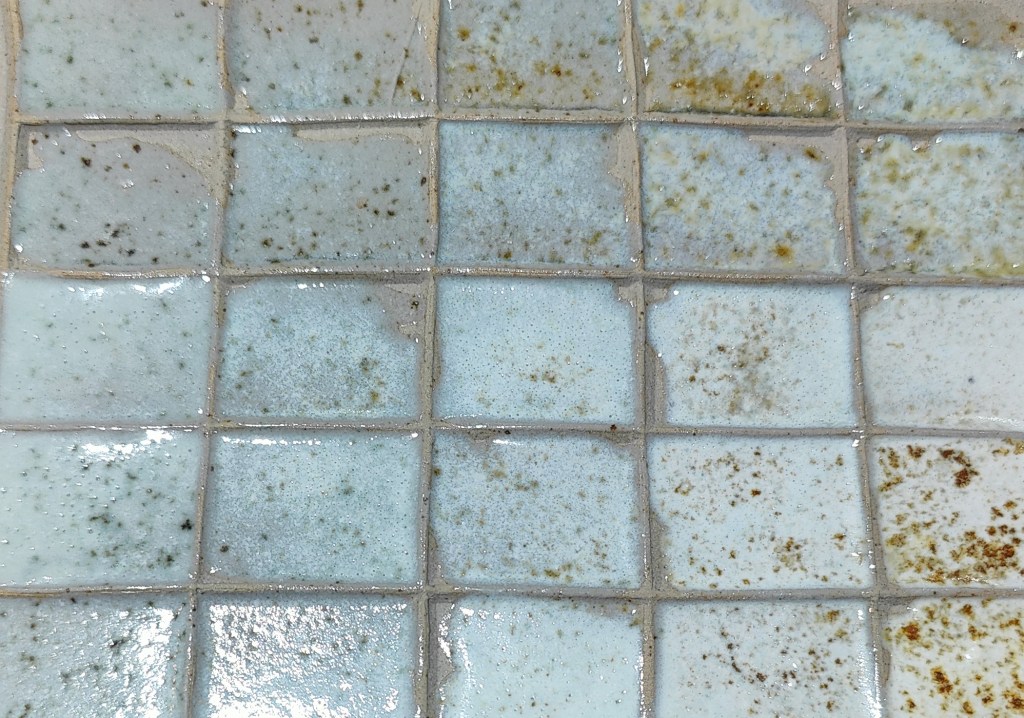
We have since been exploring stone circles, and we were interested to know if stone, specifically bluestone could be made into a glaze. What would it look like and would it retain any of the magical energy properties we feel from it. So Mike was thrilled to get on Matthews second glaze course, specifically on rock glazes, and all the knowledge Mike needed to link glaze to the landscape. Completed this August the course was phenomenal. Not only building on the previous course, with a chance to consolidate some things which hadn’t quite sunk in, as it’s a complex subject. So now Mike is both confident and competent to to make glaze from any found rock, clay or ash, at least in theory. Matthew is a fantastic teacher, so incredibly knowledgeable and experienced. The passion he has for his work is a joy to listen to and, at your peril, catching.

Getting access to rock and clay in the landscape to take away legally or even buy is not straight forward in the UK, although an incredible range of geology is found in the UK. We did not know actually taking pebbles from a beach is actually illegal. All land is owned so permission is needed, along with considerable effort if you need anything but a small amount of material for testing. You also need the right kit to go with know how and these things can be expensive. Breaking some of these rocks is difficult because they are extremely hard and some rock just doesn’t melt on its own at stoneware kiln temperatures. A chemistry approach is possible to make glazes but finding the exact chemical formulae for specific found stone is not as easy as it sounds in spite of extensive geological mapping in the UK and access to information through lots of available geology resources. A certain try, then modify approach is needed, and this approach although quite scientific in its precise testing methodology is wonderfully alchemic. Guess what Mike will be up to in his art practice going forward? Yep found materials.
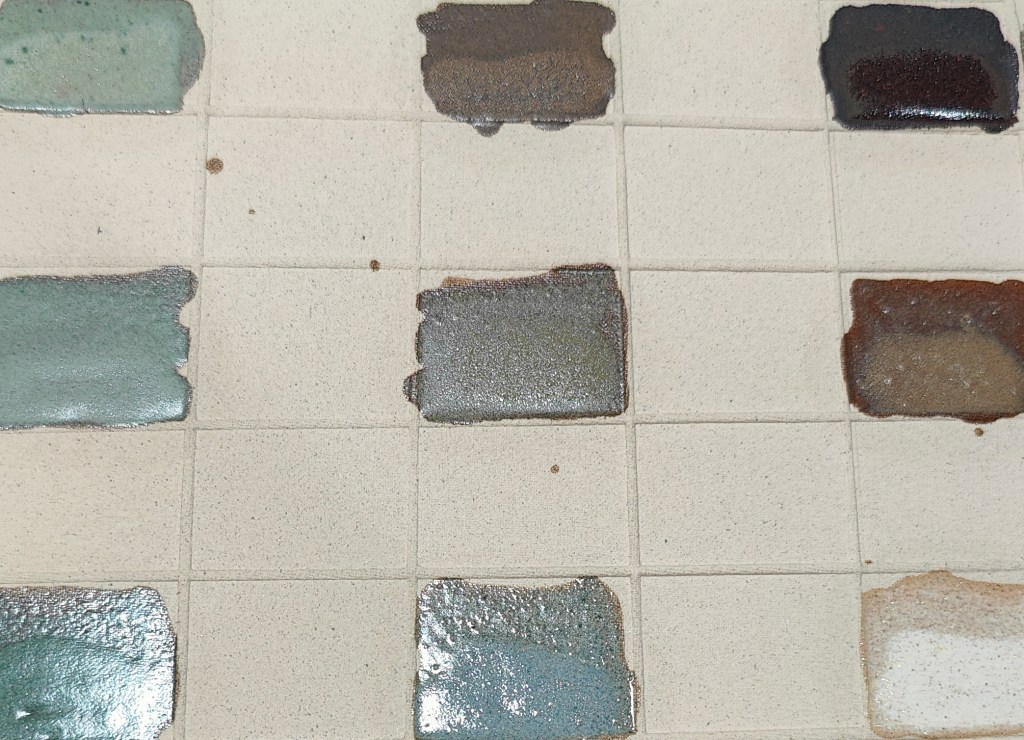
Here at Earthwaves we are exploring the magic of both spiritual connection and how people have used magic in shamanism and witchcraft. Both avenues of investigation have extremely strong connections to nature and the landscape so it is a natural extension from earlier work. A new fire pit in Mike’s sacred garden will offer opportunities to use fire in magic and to use the ash in ceramics. And the whole nature of the ceramic making alchemy will no doubt delivery some wonderfully magical results. We have illustrated the early glaze testing images of Mike’s. They are in themselves quite beautiful, and very difficult to capture photographically. As indeed is Matthew Blakely’s work, some of the most stunning glazed pieces I have seen. Online photos just don not to justice to them. His gallery, you can see during open studio events, is like a gemstone treasure trove to Mike. Matthew also shows at a number of well known ceramic events and you can buy pieces online directly from his shop.