
Happy 2026 from Earthwaves!
The first joint outing of the year was to Tate Britain to see the astonishing exhibition of the photographic work of Lee Miller. Our interest had initially been piqued by the film Lee watched last year with Kate Winslet in the title role. That film focussed upon Miller’s later work as a war photographer; however, as we were to discover, her creativity went so much further.
The exhibition was extensive, chonological and emotionally exhausting. It encompassed her early years as a model for Condé Nast, her involvement with surrealism and collaboration with Man Ray, exhibited photographs from her time in Egypt and London where she was honing her craft, her work as a war photographer for British Vogue and her later photographs creating portraits of famous faces. The wartime photography was extraordinary in the way she picked her subject and framed it, avoiding the gory and sensationalist, except where it couldn’t be avoided. Even her photo-journalism brings together her artistic qualities, and in relation to the subject produced deeply moving and telling stories of the time.
While Miller’s modeling and fashion shots felt distinct, they retained her signature style. The exhibition left Mike deeply moved, offering a raw window into the wartime struggles his parents’ generation faced. This was heightened by a personal parallel: his mother’s training in haute couture, a field shared with Miller, was similarly derailed by the conflict. This visceral exhibition resonates on a level that is difficult to describe. Interestingly, Mike noted that both women eventually pivoted to more ‘home-based’ interests post-war—a shift that suggests a shared need for healing and recovery after years of upheaval and the psychological trauma of war.
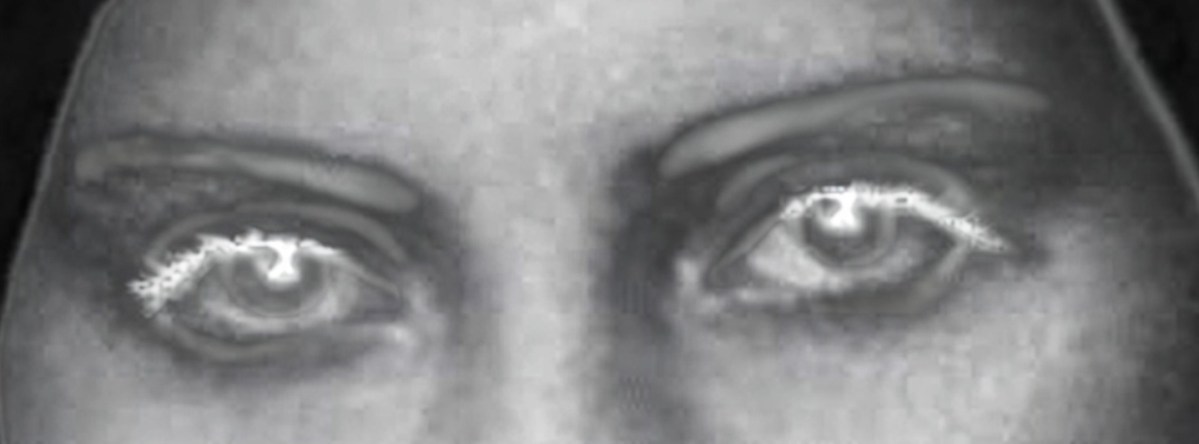
While the entire exhibition was fascinating, it was Miller’s connection with the Surrealist movement that truly captured our interest. It powerfully highlighted how, even as women were fighting for the vote, Miller was simultaneously pushing boundaries and claiming her unique right to self-expression. The photographs exhibited from the period were the most striking and demonstrated that here was a woman who was progressive in her attitude toward art, but also unafraid to use her own exposed body to challenge notions around the male gaze in Surrealism. Through these images, one gets a sense of a woman who had a fiercely independent attitude toward her own nudity, using it as a tool for artistic expression rather than something to be shameful of. We supposed it was helpful for her to be living in an era – the 1920s – where generally attitudes toward nudity and sexuality were more progressive, given that one was in the circle of like-minded bohemians.
This part of the exhibition brought to mind the nature of our work in Earthwaves and how engagement with Tantra was instrumental in bringing our different art practices together, much like Lee Miller and Man Ray. Tantra, with its notions of personal agency and ‘letting go’ of ego, proved to be artistically and personally liberating for us and has informed our work since. It was easy to see Miller’s work both as subject and creator as as the product of a free-thinking and liberated individual with a driving impulse to pursue and push the boundaries of creativity.
It also made us reflect on how we may have been restraining our art practices; have we been playing it too safe, knowing that we want to push the limits and break new ground but have been holding ourselves back? It was a sobering thought, but had a ring of truth to it. Miller’s embracing of Surrealism into her work, ‘the surrealist love of chance’ which continued throughout her career, is evident in the pictures submitted. Our challenge in Earthwaves in 2026 is to lean into this love of chance, to further our exploration of progressive ideas and to be unafraid to venture into them. At a time in our history where everything appears to be regressing, it is up to us to relentless push forward.